Category: Informational

  • Reliability in Simplicity for Power Plant Maintenance

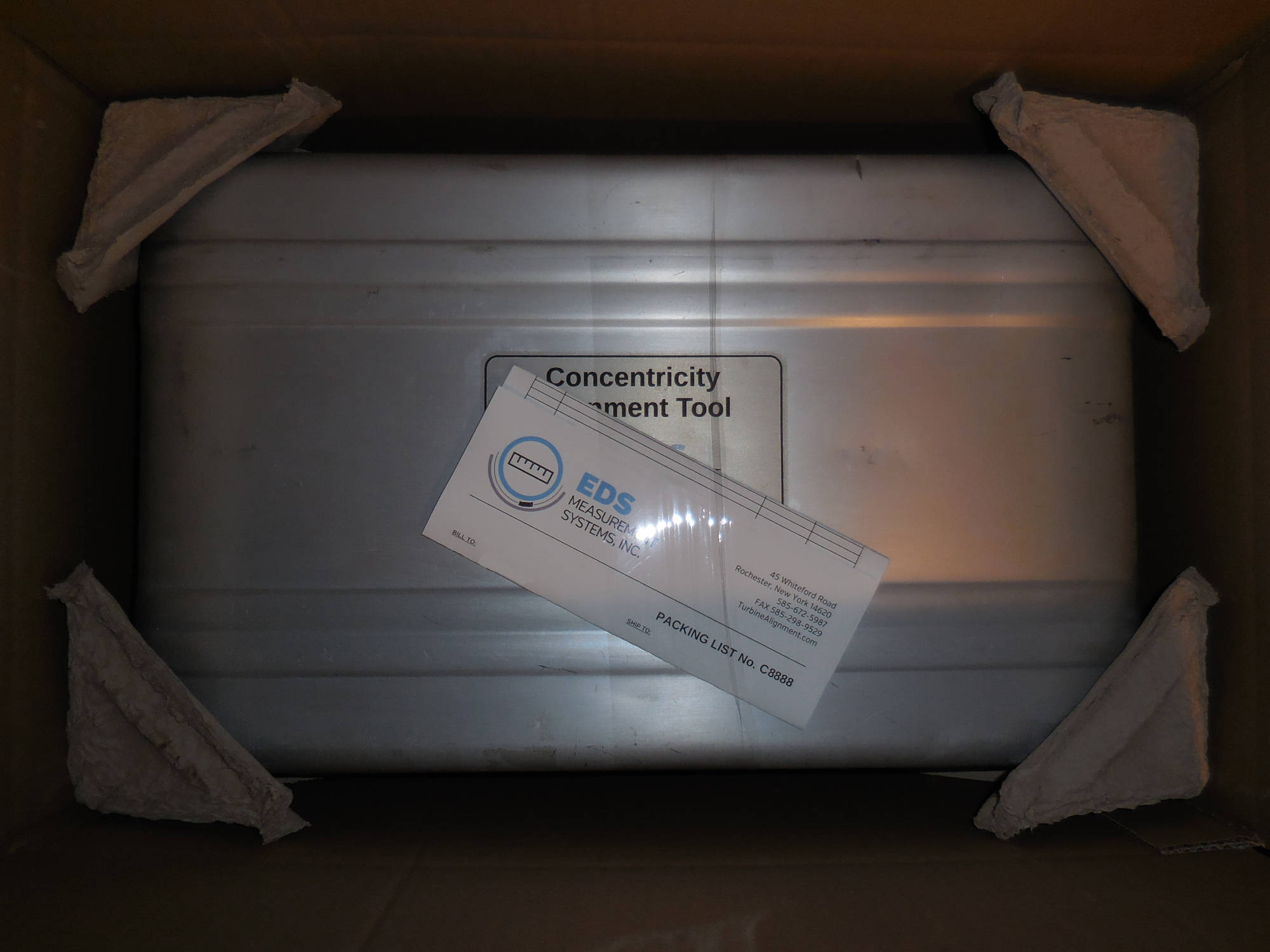
    At EDS Measurement Systems, Inc., one of our primary goals is reliability. Rather than chasing the latest technology, we stick with what works. Our ERAGs are designed with a simple mechanism that has proven reliable. The Concentricity Alignment Tool (CAT) is portable and ready to go, making it an ideal choice for power plants in remote locations, and for outages where minutes count.

    The electronics in the power supplies, despite the elaborate appearance, is ultimately a simple analog signal path and a digital meter. We have considered adding WiFi, Bluetooth, and even USB keyboard emulation for easier data collection, but have consistently ruled each of them out.

    Avoiding Technical Complexity

    First, any of these methods adds a significant level of complexity. Wireless technology, and even wired solutions like USB would need additional cyber-security measures. Maintaining a secure connection is critical to prevent data leaks and sabotage. The simplicity of the CAT makes it immune to nearly any outside attack.

    Also, adding a computer-interface solution requires additional interoperability testing and technical support. When something goes wrong, it’s best if it can be understood and diagnosed on the spot. Every computer has a unique set of software and hardware that—more often than not—requires advanced technical assistance to get it to work correctly with an attached device.

    Designed for Power Plant Maintenance

    Second, the CAT is intended to last as long as a power plant. If we had added data collection technology years ago, it might have taken the form of RS-232 or IrDA, both now considered legacy systems, and challenging to interface with modern computers at best. Also, rather than switching to a proprietary hard-to-find modern lithium-ion battery, it runs on standard 9V batteries available practically anywhere.

    Rely on Expertise

    Finally, the direct human-readable display has proven to be reliable, relying on the experience and expertise of the plant technicians. They are the first line of defense, and their institutional knowledge gives them the ability to detect unusual conditions and erroneous readings.

    By redundantly collecting data (e.g. multiple data points from multiple operators) and performing rudimentary statistical tests (e.g. outlier data points are likely to be an obvious human error) accurate, consistent readings yield faster and more accurate alignment.

    Loading

  • Politics

    Politics in America have become increasingly divisive. However, EDS Measurement Systems, Inc. does not endorse one party or another. We don’t donate to any causes, parties, nor candidates. It seems to be the only ethical way to do business.

    In general, companies and corporations are convenient constructs to encapsulate resources and skills for a purpose. The intent is for those constructs to serve humanity; to make something better. Sure, profits are involved, and that is how Capitalism works, but the construct itself is simply that. It has no agency—no means to act on a belief system, and for that matter, no belief system of its own. It is the people who work within that construct who have such agency. And as individuals, they have the ability and means to effect political change.

    Also, it is professionally advantageous to have no political stance. Individual people make purchasing decisions, so without a political stance, individual biases or preferences have no relevance. The point is to ensure that anybody working with us will have no reason not to.

    Loading

  • How Often is ERAG Calibration Necessary?

    TL;DR

    Annually.

    But if you only use the tool once or twice in a year, then every other year.

    How Often is Often Enough?

    Like any calibration, it’s a matter of risk and confidence. A brand new tool (or one freshly calibrated) offers the highest confidence in the accuracy of its readings. Every day, that confidence level drops a little. Assuming regular use, one could expect the confidence in accuracy to drop to zero after 20 years—nearly any tool with no maintenance for 20 years would almost certainly have inaccurate readings. So between day-one and year-20, there is a point when the confidence drops below some threshold that is acceptable for your purposes.

    Anecdotally, we recently had a Concentricity Alignment Tool (CAT) that came in for maintenance that had been in the field for 14 years, and by luck it was still within specifications. But this is certainly the exception. Roughly speaking, over 90% of CATs calibrated annually still meet specifications; that drops to about 75% for tools maintained every other year.

    Preventing ERAG Failures

    Put another way, there is a likelihood of failure that slowly increases over time, and may be accelerated by each use. Although an on-site dramatic failure would likely be detected (readings drifting as they are being read, blank display, etc.), there are other kinds of failures that we detect and repair during calibration may not be apparent during an alignment job but would be equally detrimental to a correctly executed turbine alignment (readings varying because of a loose cable clamp, nonlinear response of actual distance versus reported measurement, etc.)

    ERAG Calibration for Accuracy, Consistency, and Confidence

    At EDS Measurement Systems, Inc., we take precision seriously. Our calibration stands undergo an annual check against gage blocks. In turn, those gage blocks are sent to a service that validates them against NIST-traceable standards. NIST—the National Institute of Standards and Technology—is the gold standard for measurement accuracy. Thus, the results provided from a calibration are reliable and accurate.

    Another benefit is to make different tools provide consistent measurements. If you used one ERAG on an alignment then a different one the next alignment, the results would be the same. Calibration increases the confidence that measurements are accurate.

    ERAG Calibration for Quality Assurance and Traceability

    Calibration to NIST standards is often a requirement for quality assurance programs, whether through internal corporate requirements, for industry regulations, or for certifications. By providing a traceable reference point, if there’s ever a question about the accuracy of your measurements, you can trace them back to a recognized standard.

    Conclusion

    As you increase the time between regular maintenance, the potential for inaccuracy and failure increases. But because each customer uses their tool differently, there is no easy answer. The only way to find out with absolute certainty is to start increasing the time between maintenance and wait for an issue. This would result in additional turbine downtime, either to perform turbine repairs, or until the tool was repaired or a replacement acquired. This does not seem like a wise course of action.

    Regular calibration helps identify and correct any drift in tool performance, reducing the risk of errors in measurements. Knowing that your tools are calibrated to a recognized standard gives you confidence in your measurements and results.

    Loading